The True Cost of Waiting: Why Delivery Reliability Has Become the Most Critical Factor in Bearing Procurement
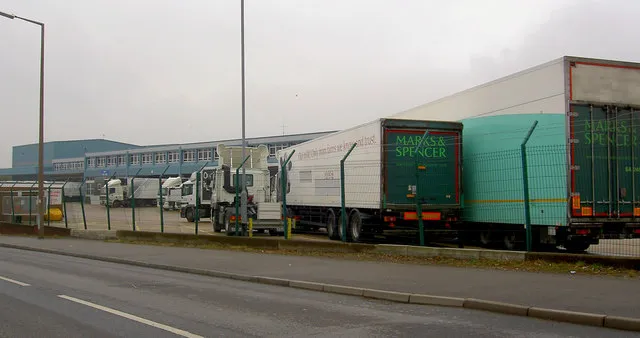
Photo: Steve F, CC BY-SA 2.0, via Wikimedia Commons
There is a number that does not appear on any bearing quote, and it is almost certainly the largest number in the transaction.
It is the cost of the production hours lost while your maintenance team waits for a replacement component. It is the cost of the expediting fees paid to air-freight a bearing from overseas at the eleventh hour. It is the cost of the customer order that ships late, the contract penalty clause that gets invoked, and the relationship with a key account that takes years to rebuild after a missed delivery commitment. It is, in short, the cost of a lead time—and for too many US manufacturers, it has taken a painful operational crisis to make that cost visible.
The procurement calculus that governed industrial component purchasing for most of the past two decades was straightforward: solicit multiple quotes, select the lowest price from a qualified supplier, and manage inventory leanly to minimize carrying costs. That model assumed reliable, predictable delivery. In today's supply environment, that assumption no longer holds—and the manufacturers who have not yet updated their procurement frameworks are the ones absorbing the consequences.
How the Supply Chain Calculus Shifted
The disruptions of the early 2020s exposed structural vulnerabilities in global bearing supply chains that had been building for years. Heavy consolidation among major bearing manufacturers, combined with aggressive offshoring of production to lower-cost regions, had created a supply base that was efficient under stable conditions but fragile under stress. When demand surged, logistics networks seized, and raw material costs spiked simultaneously, lead times for standard bearing SKUs stretched from weeks to months at many suppliers.
While some of the most acute bottlenecks have eased, the underlying conditions that created them have not been resolved. Domestic manufacturing capacity for precision bearings remains limited relative to total US demand. Freight volatility continues to affect import-dependent supply chains. And the inventory drawdowns that many distributors executed during the slowdown periods of 2022 and 2023 have left stocking levels thinner than historical norms at precisely the moment when US industrial output is accelerating.
The reshoring of manufacturing capacity—across automotive, aerospace, semiconductor fabrication, and defense—is adding new demand to a supply base that has not expanded proportionally. Facilities that once ordered bearings with comfortable lead-time buffers are now competing for the same SKUs with a broader pool of buyers.
Quantifying What a Lead Time Actually Costs
The finance teams at most manufacturing companies track purchase price variance with precision. They track carrying costs, turn ratios, and procurement overhead. What they rarely track with equal rigor is the cost of a stockout—the operational and commercial impact of waiting for a component that should have been available.
Consider a realistic scenario: a mid-sized automotive components manufacturer in Ohio operates a production line running a single shift of 10 hours per day, five days per week. The line produces assemblies valued at $18,000 per hour of output. A critical conveyor bearing fails. The maintenance team identifies the replacement part, solicits quotes, and selects the lowest-cost option from a supplier offering a 12-week lead time at a price $47 lower than a domestic distributor who can deliver the following business day.
The math is not complicated. At $18,000 per hour of lost production, even a single day of downtime—eight to ten production hours—represents a loss of $144,000 to $180,000. A week of downtime, which is entirely plausible for a facility without an alternative supply arrangement, approaches seven figures. Against that exposure, a $47 price difference is not a procurement saving. It is a rounding error on a potential catastrophe.
This is not a hypothetical constructed to make a rhetorical point. Versions of this scenario play out regularly across US manufacturing facilities, and the operational post-mortems consistently identify the same contributing factor: procurement decisions optimized for unit price without adequate weight given to supply certainty.
The Inventory Strategy Rethink
For many procurement and operations teams, the response to supply chain volatility has been a renewed interest in safety stock—holding higher on-hand inventory of critical bearing SKUs to buffer against lead-time uncertainty. This is a reasonable response, and for genuinely critical components with long replacement lead times, it is often the correct one.
However, safety stock is not a complete solution. It consumes working capital, requires storage space, and creates its own risks around shelf life and condition management for lubricated components. A more sustainable approach combines modest safety stock for the highest-criticality items with a distributor relationship that provides reliable access to a broad stocking portfolio on short notice.
The distinction between a transactional supplier and a strategic distribution partner matters here. A transactional supplier processes orders for whatever is in stock and quotes lead times on everything else. A strategic partner maintains deep inventory across a wide range of SKUs, provides visibility into stock levels before an emergency arises, and has the logistical infrastructure to support next-day or same-day delivery when circumstances demand it. That capability has a value that does not appear on a price comparison spreadsheet—but it appears very clearly on a production downtime report.
Domestic Distribution as a Risk Management Tool
The case for prioritizing domestic distributors is not simply patriotic preference. It is a risk management argument grounded in supply chain geometry. A bearing held in a US distribution center is insulated from port congestion, international freight delays, customs clearance variability, and the currency and geopolitical risks that affect import-dependent supply chains. Its availability can be confirmed in real time. Its delivery timeline is measured in hours or days, not weeks or months.
For facilities operating in industries with tight production schedules and low tolerance for unplanned downtime—aerospace, medical device manufacturing, food and beverage processing, defense contracting—that insulation from external supply chain risk has genuine strategic value. Procurement teams that treat domestic distributor relationships as a premium to be avoided are, in effect, self-insuring against supply disruption at a cost that is rarely calculated and almost never budgeted.
Rethinking the Scorecard
The most practical change procurement teams can make is to expand the metrics by which they evaluate bearing suppliers. Price per unit is one variable among several that should carry weight in supplier selection. Delivery reliability—measured as on-time fulfillment rate against quoted lead times—deserves equal or greater emphasis. Stocking depth across the SKU range a facility regularly consumes matters. The supplier's ability to respond to emergency requirements, and their track record of doing so, is worth assessing explicitly rather than assuming.
Facilities that have adopted this expanded scorecard consistently report that their total cost of bearing procurement—including the operational costs of delays, expediting, and downtime—falls even when their per-unit acquisition cost rises modestly. The math, when fully accounted for, is not close.
The bearing market has changed. The procurement strategies appropriate to a stable, low-cost global supply environment are not the right tools for the supply chain landscape US manufacturers are actually navigating today. Availability, reliability, and partnership are not soft considerations to be weighed against price. They are the foundation on which production continuity is built—and they are worth paying for.