Running Fast, Lasting Long: How Engineers Navigate the Speed-Versus-Durability Challenge in Demanding Applications
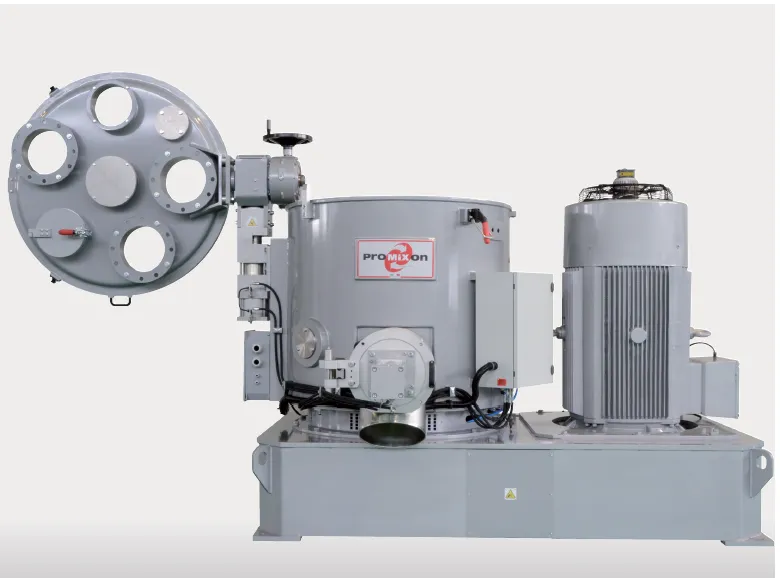
Photo: Trizziana, CC BY-SA 4.0, via Wikimedia Commons
There is a persistent misconception in engineering procurement: that a bearing rated for a given speed will perform reliably at that speed under any load, in any environment, for any duration. This assumption has contributed to more premature failures, more unplanned shutdowns, and more frustrated production managers than perhaps any other single misunderstanding in industrial component selection.
The reality is considerably more nuanced. Bearing performance at high rotational speeds is not a fixed attribute — it is a dynamic relationship between speed, load, temperature, lubrication, geometry, and material, all interacting simultaneously. For engineers working on high-performance applications in sectors ranging from aerospace manufacturing and precision machining to high-speed packaging lines and turbomachinery, navigating these interactions is not an academic exercise. It is the difference between a system that performs and one that fails.
The Physics of the Problem
At its core, the tension between speed and longevity is a thermal and mechanical challenge. As rotational speed increases, so does centrifugal force on rolling elements. In ball bearings, this manifests as increased contact stress between balls and the outer raceway — a phenomenon that accelerates fatigue. In roller bearings, the dynamics are different but the consequence is similar: elevated internal forces that the bearing's geometry must absorb.
Friction is the other variable that compounds with speed. Even in a well-lubricated bearing, some friction is unavoidable, and it scales with velocity. That friction generates heat. Heat degrades lubricant viscosity, which in turn reduces film thickness, which increases metal-to-metal contact, which generates more heat. This cycle — sometimes called thermal runaway in extreme cases — can progress rapidly in an inadequately specified bearing operating near its speed limits.
Bearing manufacturers publish two speed ratings: a thermal reference speed, which reflects the rotational velocity at which heat generation and dissipation reach equilibrium under standard conditions, and a limiting speed, which represents an absolute mechanical ceiling. Operating near either limit without careful analysis of the specific application conditions is an engineering risk that too many procurement decisions ignore.
Where the Trade-Off Becomes a Business Problem
Consider a mid-sized precision machining operation in the Midwest that upgraded its CNC spindle systems to achieve higher material removal rates. The engineering team specified angular contact ball bearings rated for the target spindle speeds — technically correct on paper. What they did not fully account for was the simultaneous demand for aggressive cutting loads during heavy roughing passes. The bearings were speed-rated for the application but not load-optimized for the combined radial and axial forces generated during those cutting cycles.
The result was a pattern of bearing failures at intervals far shorter than the predicted service life. Each failure required spindle disassembly, a process that took skilled technicians the better part of a shift to complete. Over six months, the cumulative downtime exceeded 200 hours — a figure that dwarfed the cost of the bearings themselves.
The resolution came not from selecting a heavier-duty bearing in the same configuration, but from transitioning to a matched pair of high-precision angular contact bearings with a modified contact angle, paired with a revised lubrication strategy using oil-air mist delivery. The new configuration achieved the required speed performance while distributing combined loads more effectively across both bearings. Failure intervals extended significantly, and spindle rebuild frequency dropped by more than half.
This case illustrates a principle that experienced bearing engineers understand well: in high-performance applications, the optimal solution is rarely found by optimizing a single parameter.
Reading the Specification Sheet as an Engineering Document
Bearing catalogs are dense with data, and for engineers under time pressure, it is tempting to focus on the headline numbers — bore diameter, outer diameter, speed rating, dynamic load rating. But the specification sheet contains critical information that those summary figures do not convey.
The C/P ratio — the relationship between the bearing's dynamic load rating (C) and the applied load (P) — is the foundation of fatigue life calculation. The L10 life formula, which estimates the number of operating hours at which 90 percent of a population of identical bearings under identical conditions will survive, is highly sensitive to this ratio. Doubling the load reduces L10 life by a factor of eight for ball bearings. This non-linear relationship means that modest load increases at high speeds can compress service life dramatically.
Speed correction factors in modern bearing specifications account for lubrication method, bearing size, and operating temperature. A bearing rated for 12,000 RPM under standard oil bath lubrication may be safely operable at 15,000 RPM with precision oil-air mist delivery — or may require de-rating to 9,000 RPM if ambient temperatures are elevated and cooling is inadequate. These adjustments are not footnotes; they are engineering inputs.
Material and internal clearance specifications matter more at high speeds than at moderate ones. Bearings manufactured from vacuum arc remelted (VAR) steel exhibit superior fatigue resistance compared to standard bearing steel, a distinction that becomes meaningful when operating at elevated speeds and loads over extended periods. Internal clearance — the total movement of the inner ring relative to the outer ring before load is applied — affects both running temperature and load distribution. Specifying the correct clearance class for a given operating temperature range is a detail that directly influences longevity.
The Role of Lubrication in Bridging the Gap
If there is a single variable that most effectively mediates the speed-versus-longevity trade-off, it is lubrication. The protective film that separates rolling element surfaces from raceways is measured in micrometers, but its integrity determines whether a bearing achieves its rated life or fails prematurely.
For high-speed applications, grease lubrication has practical limits. Grease channeling — the process by which grease is displaced from the contact zone at high speeds — can leave rolling elements inadequately protected. Recirculating oil systems, oil-air mist delivery, and oil-jet lubrication are progressively more effective at maintaining film integrity as speeds increase, each with its own complexity, cost, and maintenance implications.
A packaging equipment manufacturer on the East Coast learned this when expanding its line speeds to meet increased customer demand. The original grease-lubricated bearings had performed reliably for years at moderate speeds. At the new operating velocities, grease channeling resulted in elevated temperatures and accelerated wear. Transitioning to oil-air mist lubrication — a meaningful capital investment — restored bearing performance and extended service intervals beyond the original baseline. The production gains from the higher line speed justified the lubrication system upgrade within the first year of operation.
Engineering the Right Answer
There is no universal formula for resolving the speed-versus-longevity trade-off, because the variables are too application-specific. What experienced engineers know is that the resolution requires a systems view: bearing geometry, material specification, internal clearance, lubrication method, mounting configuration, and operating environment must all be evaluated together, not in isolation.
For US manufacturers pushing production envelopes — higher speeds, tighter tolerances, longer continuous run times — the bearing selection decision is a strategic one. The component may be small relative to the machinery it supports, but its influence on system performance is disproportionate. Getting the specification right from the outset is always less expensive than diagnosing and correcting a failure in production.
Precision in engineering begins with precision in specification. That principle applies nowhere more directly than in the selection of bearings for high-performance industrial applications.