The Reshoring Revolution: How America's Manufacturing Comeback Is Reshaping Bearing Supply Chains
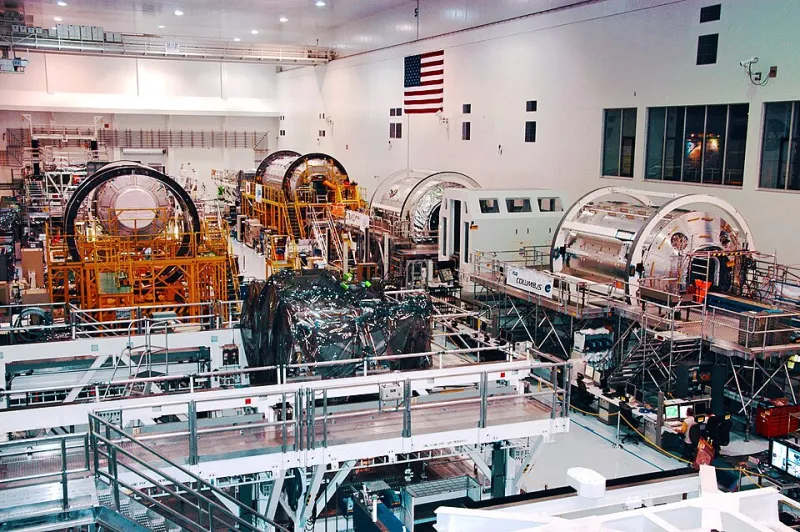
Photo: Creator:George Shelton NASA KSC, retouched and enhanced by John Chryslar, Public domain, via Wikimedia Commons
For much of the past three decades, the prevailing logic in American manufacturing was straightforward: move production where labor is cheapest, optimize for cost, and trust that global logistics networks would keep shelves stocked. That logic unraveled with startling speed between 2020 and 2022, when container shortages, port congestion, and geopolitical friction exposed just how fragile extended supply chains had become. The response from US manufacturers has been decisive—and it is fundamentally changing how industrial components, including bearings, flow through the domestic economy.
The Forces Behind the Shift
Reshoring—the practice of returning manufacturing operations to the United States from foreign locations—was already gaining modest traction before the pandemic. The Reshoring Initiative, a nonprofit that tracks manufacturing job announcements, reported that reshoring and foreign direct investment (FDI) together brought back more than 350,000 jobs in 2022 alone, a record at the time. That figure has continued to climb.
Several converging pressures are sustaining this momentum. Rising labor costs in China have eroded much of the wage arbitrage that made offshoring attractive in the first place. Freight rates, though they have moderated from their 2021 peaks, remain structurally higher than pre-pandemic levels. Meanwhile, federal legislation—most notably the CHIPS and Science Act and the Inflation Reduction Act—has created powerful financial incentives for domestic production in sectors ranging from semiconductors to electric vehicles.
Perhaps most importantly, corporate risk managers have fundamentally reassessed their tolerance for single-source, single-region supply strategies. The image of a ship blocking the Suez Canal for nearly a week in March 2021 became something of a symbol for the vulnerabilities built into globalized manufacturing. Boards and C-suites took notice.
What Reshoring Looks Like on the Factory Floor
The reshoring trend is not uniform across industries. Sectors with high national security relevance—defense components, medical devices, advanced electronics—have seen the most aggressive repatriation of capacity. But the ripple effects extend well into general industrial manufacturing.
Consider the automotive sector. Several major OEMs and their Tier 1 suppliers have announced significant expansions of domestic assembly and machining capacity, particularly in the Southeast and Midwest. A new electric vehicle battery plant in Georgia, for instance, requires not just the headline equipment but thousands of precision-machined subcomponents—and every conveyor, motor, gearbox, and pump in that facility requires bearings.
Similarly, reshored electronics manufacturing—driven by CHIPS Act funding—demands ultra-clean production environments with equipment that relies heavily on precision ball bearings and specialized linear motion components. These are not commodity applications; they require exacting specifications and reliable, documented sourcing.
Food processing, packaging, and agricultural equipment manufacturers have also been quietly consolidating operations stateside, motivated by a combination of quality control concerns and the desire to reduce lead times for replacement parts.
The New Demand Patterns for Bearing Suppliers
Each wave of reshored production creates a distinct demand event for bearing suppliers and industrial distributors. The construction and commissioning phase of a new domestic plant generates substantial one-time demand for precision components across a wide range of specifications. But the more durable opportunity lies in what follows: ongoing MRO (maintenance, repair, and operations) demand from facilities that are now physically located in the United States and need reliable local supply.
This matters enormously for lead times. A plant manager running a three-shift operation in Spartanburg, South Carolina, cannot afford to wait six weeks for a replacement spherical roller bearing from an overseas source. The calculus has shifted: proximity and reliability now command a premium that many procurement teams are willing to pay.
Domestic distributors are also seeing increased demand for value-added services alongside the components themselves. Engineers at newly reshored facilities often need technical support in specifying the correct bearing for a given load, speed, and environmental condition. They need kitting, custom packaging, and in some cases consignment inventory arrangements that keep critical spares on-site without tying up capital.
How Industrial Distributors Can Capture the Opportunity
Positioning a bearing distribution business to benefit from reshoring requires more than simply having product on the shelf. The manufacturers driving this trend are sophisticated buyers who have experienced the consequences of supply chain failure firsthand. They are looking for partners, not just vendors.
Depth of inventory matters. Reshored manufacturers often work with engineering-intensive applications that require bearings in less common sizes and configurations. A distributor with broad stocking depth—across ball, cylindrical roller, tapered roller, spherical roller, and needle bearing categories—will be far better positioned than one relying on drop-ship arrangements with extended lead times.
Technical credibility is non-negotiable. The engineers and maintenance planners at reshored facilities are often dealing with new equipment, new processes, and new specifications. A distributor whose sales team can engage at a technical level—discussing load ratings, lubrication requirements, mounting tolerances, and failure modes—builds the kind of trust that translates into preferred-vendor status.
Geographic footprint and logistics capability are increasingly competitive differentiators. Same-day or next-day delivery of critical components can mean the difference between a brief maintenance window and a costly production shutdown. Distributors who have invested in regional stocking locations and reliable last-mile logistics are well placed to serve the growing cluster of reshored facilities in manufacturing corridors across the Midwest, Southeast, and Mid-Atlantic.
Documentation and traceability have also risen in importance. Manufacturers in aerospace, defense, and medical device sectors—all active reshoring participants—require rigorous documentation of component origin, material certifications, and quality records. Distributors who can provide that paper trail reliably will find doors open that remain closed to those who cannot.
Looking Ahead
The reshoring movement is not a temporary correction. It reflects a structural reassessment of how American companies think about supply chain risk, national competitiveness, and operational resilience. The investments being made today in domestic manufacturing capacity will generate bearing demand—both for new installations and for ongoing maintenance—for decades to come.
For domestic bearing suppliers and distributors, the message is clear: the market is moving toward you. The question is whether your inventory depth, technical expertise, and service capabilities are positioned to meet it. Those who invest now in the relationships, the stock, and the knowledge base to serve reshored manufacturers will find themselves holding a durable competitive advantage in a market that is only going to grow.
At Global Bearings, we have been watching this shift closely—and building our capabilities accordingly. If your operation is scaling up domestic production and needs a bearing supply partner with the depth and technical support to match, we are ready to have that conversation.