From Reactive to Predictive: How Smart Sensor Technology Is Ending Unplanned Bearing Downtime
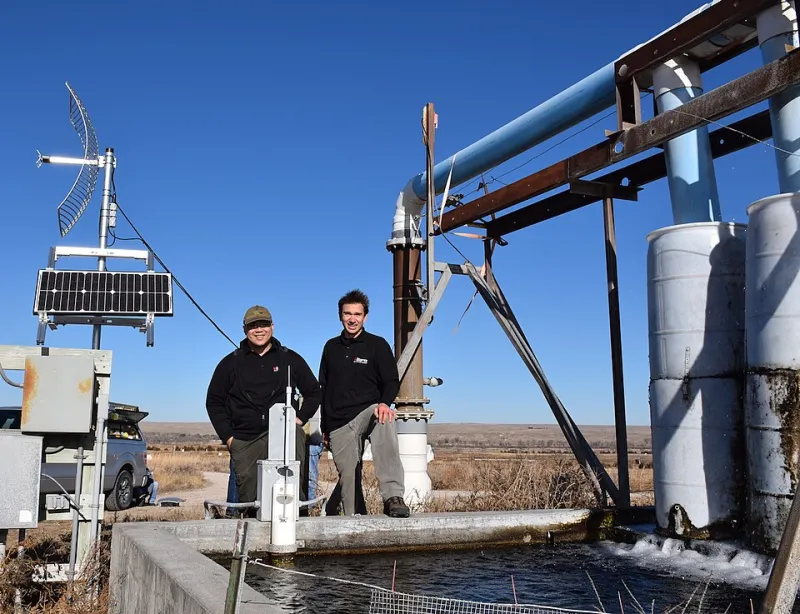
Photo: Edwardpultar, CC BY-SA 4.0, via Wikimedia Commons
For decades, the standard approach to bearing maintenance in American manufacturing plants followed a familiar and costly pattern: run the equipment until something breaks, then shut everything down, source replacement components under pressure, and absorb the lost production hours. The industry had a name for it — reactive maintenance — and despite its obvious drawbacks, it persisted largely because the alternative required infrastructure that many facilities simply did not have.
That infrastructure now exists, and it is increasingly affordable. Across the US manufacturing sector, a convergence of industrial IoT sensors, edge computing hardware, and machine-learning analytics platforms is making continuous bearing health monitoring accessible to facilities well beyond the Fortune 500. The shift is not merely technological. It represents a fundamental rethinking of how mechanical components are managed across their operational lifespan.
What Condition-Based Monitoring Actually Measures
At the core of any predictive maintenance system is the ability to detect the early physical signatures of bearing degradation before that degradation becomes a failure event. Bearings communicate their distress through several measurable channels, and modern sensor arrays are designed to capture all of them simultaneously.
Vibration analysis remains the most widely deployed diagnostic method. As bearing raceways, rolling elements, or cages begin to wear, they generate characteristic vibration frequencies that deviate from the baseline established when the component was new. Accelerometers mounted directly on housings or adjacent structures capture this data in real time, transmitting it to analysis software that flags anomalous patterns. Temperature sensors provide a complementary signal — a bearing running hot relative to its normal operating range is often a bearing that is about to fail. Acoustic emission sensors, which detect the ultrasonic stress waves produced by surface fatigue and micro-cracking, round out the most common sensor configurations.
The raw data these instruments collect is voluminous and, without intelligent processing, largely uninterpretable by plant personnel. This is where AI-driven analytics platforms earn their place in the system. Machine-learning models trained on large historical datasets can distinguish between a bearing that is simply running under elevated load and one that is exhibiting the specific vibration signature of early-stage spalling on an outer raceway. The difference between those two diagnoses determines whether a maintenance team acts today or waits another three weeks.
Case Evidence: What the Numbers Look Like on the Plant Floor
The business case for predictive bearing maintenance is no longer theoretical. Manufacturers across multiple sectors have accumulated enough operational data to make meaningful cost comparisons.
A Midwestern automotive components supplier that installed vibration monitoring across its press line reported a reduction in unplanned downtime events of approximately 60 percent over an 18-month evaluation period. Before the system was deployed, the facility experienced an average of four bearing-related line stoppages per quarter, each requiring emergency sourcing of replacement components and averaging seven hours of lost production. After implementation, the same equipment generated consistent early-warning alerts that allowed maintenance crews to schedule bearing replacements during planned weekend shutdowns — eliminating the emergency sourcing premium and the unscheduled production gaps simultaneously.
A paper mill in the Pacific Northwest documented a comparable outcome focused specifically on large-diameter cylindrical roller bearings supporting its primary calendar rolls. These are high-value components in demanding environments, and their failure historically triggered multi-day shutdowns. Continuous acoustic emission monitoring allowed the maintenance team to identify progressive surface fatigue on two bearings over a six-week window, schedule the changeout during a scheduled maintenance interval, and avoid what plant engineers estimated would have been a 72-hour unplanned outage.
Neither of these facilities is a large enterprise with unlimited capital budgets. Both made calculated investments in monitoring infrastructure and recovered those costs within the first year of operation.
The Technology Stack: What Mid-Sized Manufacturers Are Actually Deploying
For plant managers at mid-sized US manufacturing operations — say, 50 to 500 employees — the practical question is not whether predictive maintenance works in principle. It is whether the investment is proportionate to the scale and risk profile of their specific facility.
The good news is that the market has matured considerably. Entry-level wireless vibration sensor systems from established industrial suppliers can be deployed on critical bearing points for a fraction of what enterprise-scale SCADA integrations cost five years ago. Many platforms offer subscription-based analytics software that eliminates the need for on-site data science expertise. Cloud connectivity means that anomaly alerts can reach a maintenance supervisor's smartphone regardless of where they are on the plant floor.
The practical deployment decision typically involves three steps. First, facilities should conduct a criticality ranking of their rotating equipment — identifying which bearing positions, if failed, would halt production entirely versus which would allow continued operation at reduced capacity. Second, monitoring investment should be concentrated on the highest-criticality positions first, allowing the facility to build operational familiarity with the system before expanding coverage. Third, baseline vibration and temperature signatures should be established for each monitored position under known-good operating conditions, giving the analytics platform the reference data it needs to detect meaningful deviation.
Limitations Worth Acknowledging
Predictive maintenance technology is not a universal solution. Some failure modes, particularly those driven by sudden overload events or contamination ingress, develop too rapidly for sensor-based monitoring to provide actionable lead time. Additionally, the accuracy of AI-driven diagnostics depends heavily on the quality and relevance of the training data underlying the model — a platform calibrated primarily on high-speed spindle bearings may not perform equally well when applied to slow-speed, heavy-load applications.
Skepticism about vendor claims is warranted, and facilities evaluating these systems should request performance data from comparable applications rather than accepting general marketing assertions. Pilot deployments on a defined subset of equipment, with clear performance benchmarks established in advance, are a more reliable basis for investment decisions than case studies selected by the vendor.
A Changing Maintenance Culture
Perhaps the most significant long-term implication of the predictive maintenance shift is not technological but organizational. Facilities that successfully adopt condition-based monitoring tend to report a gradual cultural change in how maintenance teams relate to the equipment they oversee. When the data infrastructure is in place, bearing health becomes something that is continuously known rather than periodically guessed at. That shift in situational awareness changes the nature of maintenance planning, procurement timing, and even the conversations that happen between production and maintenance departments.
For US manufacturers competing in an environment where machine uptime is a direct determinant of margin, that cultural shift may ultimately prove as valuable as the technology that enables it.