When the Drive Bites Back: Electrical Erosion in Bearings on VFD-Driven Equipment

Photo by Photo by Bruno Mira on Unsplash on Unsplash
Variable frequency drives have become standard equipment in modern U.S. plants because they deliver precise speed control, energy savings, and process flexibility. Yet the same drive technology that improves motor performance can introduce a less obvious failure mode: electrical erosion of bearings. The damage often begins quietly, develops into noise and vibration, and ends in premature replacement. Because the failure surface may look mechanical at first glance, the electrical root cause can be missed.
A Failure That Leaves Few Mechanical Clues
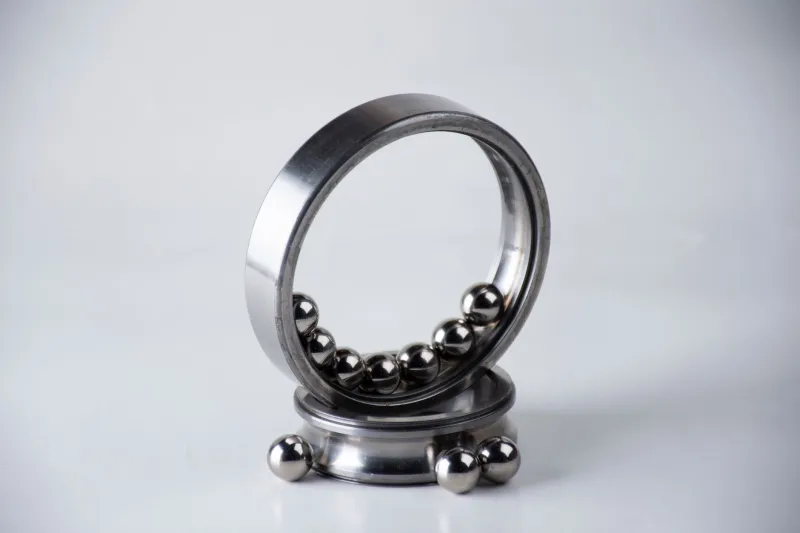
Electrical erosion occurs when voltage builds on a motor shaft and discharges through the bearing. The discharge can be brief and repetitive, but each event removes or alters material at the contact surfaces. Over time, the bearing raceways may develop pitting, a frosted appearance, or the characteristic washboard pattern often called fluting. Grease can degrade as discharge energy generates localized heat and breaks down lubricant chemistry.
The practical symptoms are familiar: increasing vibration, audible noise, elevated temperature, and grease discoloration. What distinguishes electrical erosion from ordinary fatigue is the pattern and progression. A bearing that should have years of remaining life may fail after a relatively short period, and replacement bearings may fail in the same way if the electrical environment is not corrected.
How Common-Mode Voltage Becomes Bearing Current
A drive controls motor speed by switching voltage rapidly. Those switching events create common-mode voltage, a potential that appears on all three motor phases relative to ground. Without a controlled path to ground, the motor shaft can carry voltage. The bearing, with its thin lubricant film, can act as a capacitor. When the voltage exceeds the dielectric strength of the film, a discharge occurs through the bearing.
Several current paths are possible. Circulating currents can flow through the motor shaft, one bearing, the frame, and the other bearing. Shaft-to-ground currents can discharge from the shaft through a bearing to the grounded frame. In some cases, rotor-to-ground currents develop through capacitive coupling. The severity depends on drive characteristics, cable length, motor design, grounding practices, and operating speed.
Why Modern Drives Make the Problem More Visible
The issue is not new, but it has become more prevalent as drives have spread into more applications and switching speeds have increased. Faster switching devices and longer motor cables can amplify common-mode effects. At the same time, more motors are being operated over wide speed ranges, including low-speed regimes where the lubricant film may be thinner and more vulnerable to discharge.
Modern plants also tend to have more interconnected equipment, more sensitive electronics, and tighter reliability expectations. A bearing failure that might once have been attributed to normal wear is now more likely to be investigated. That is a positive development, provided the investigation reaches the electrical root cause rather than stopping at the failed bearing.
Reading the Evidence
When a bearing fails repeatedly on a VFD-driven motor, the maintenance team should look for evidence of electrical discharge. Inspect raceways for pitting, frosting, or rhythmic fluting. Check the grease for hardening, discoloration, or a burned odor. Review vibration trends for high-frequency energy that may indicate discharge activity. Confirm that grounding and cable shielding are intact, and verify that the motor frame and driven equipment are properly bonded.
It is also important to distinguish electrical erosion from other causes. Misalignment, imbalance, lubrication failure, and contamination can produce overlapping symptoms. A bearing that shows fluting may still have been installed incorrectly or lubricated with the wrong grease. The most reliable diagnosis combines failure analysis with a review of the drive system, grounding, and operating history.
Mitigation Hierarchy
The first defense is good electrical practice. Use shielded motor cables with proper termination, bond the motor frame and driven equipment to a common ground, and follow the drive manufacturer’s installation guidance for cable length and grounding. Common-mode chokes or filters can reduce high-frequency currents. Isolation transformers may be appropriate in some installations. These measures address the source and the path, and they should be evaluated before relying solely on bearing-level fixes.
When shaft voltage remains a concern, shaft grounding brushes or rings can provide a low-impedance path from the shaft to ground. Insulated bearings can interrupt circulating currents, while ceramic hybrid bearings, with ceramic rolling elements and steel rings, can provide electrical resistance at the rolling contact. The correct combination depends on the motor, drive, load, speed, and grounding arrangement. A solution that works on one motor may be ineffective or unnecessary on another.
Specification and Maintenance
For new equipment, specify the electrical environment clearly. Tell the motor and drive suppliers how the machine will be operated, including cable length, speed range, and grounding assumptions. Ask whether shaft grounding or insulated bearings are recommended. For existing equipment, include shaft voltage checks and grounding inspections in routine maintenance, especially after drive replacements or cable modifications.
Bearing selection should also reflect the risk. In high-risk applications, ceramic hybrid bearings or insulated bearings may be justified by avoided downtime. In lower-risk applications, improved grounding and monitoring may be sufficient. The decision should be documented, because the failure mode is easy to forget once the immediate problem has been resolved.
The Electrical Root Cause Matters
Electrical erosion is a systems problem, not merely a bearing problem. Replacing a failed bearing without addressing the drive, grounding, and cable environment invites a repeat failure. Maintenance teams that understand the mechanism can ask better questions, specify more appropriate components, and recognize the evidence before it becomes a production loss. In plants where VFDs are now the default, that knowledge is part of basic reliability practice.