Remanufactured and Ready: The Strategic Case for Giving Bearings a Second Life
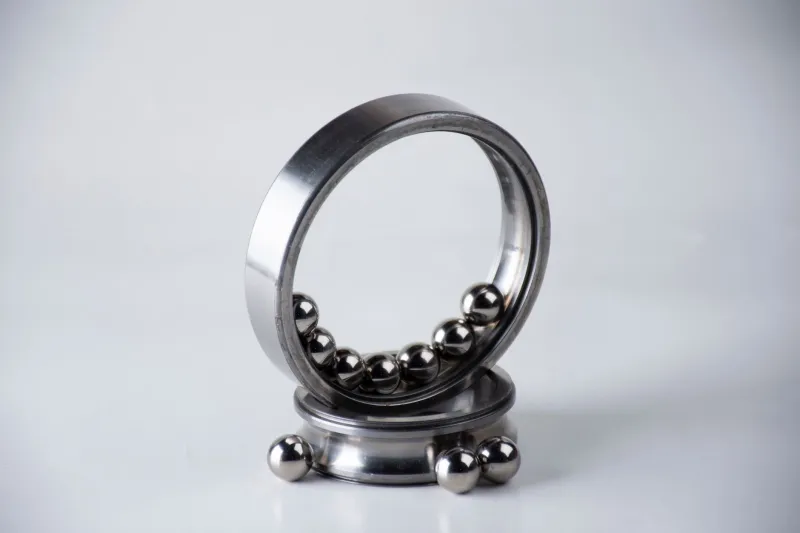
In most American manufacturing facilities, a bearing that comes off a machine goes one of two places: the scrap bin or the trash. The instinct is understandable. Bearings are precision components, and the idea of reusing something that has already been subjected to load cycles, heat, and contamination runs counter to the engineering conservatism that keeps production lines safe. But that instinct, left unexamined, may be leaving a significant amount of money on the table.
The remanufacturing of industrial bearings is not a fringe practice or a cost-cutting shortcut. It is a structured, technically demanding process that, when performed correctly and applied appropriately, can restore components to serviceable condition at a fraction of the cost of new procurement. For maintenance managers navigating tight budgets and extended lead times, understanding this option is not optional — it is a competitive necessity.
What Remanufacturing Actually Involves
The term "refurbished" is sometimes used loosely in industrial contexts, which contributes to skepticism. A bearing that has simply been cleaned and repainted is not remanufactured. Genuine remanufacturing is a multi-stage process governed by engineering specifications, not improvisation.
The process typically begins with full disassembly and dimensional inspection. Raceways, rolling elements, cages, and seals are each evaluated individually against original manufacturer tolerances. Components that fall outside acceptable limits are replaced — not reworked to borderline specifications. Surface finishing, often through precision grinding or superfinishing, restores raceway geometry. Heat treatment verification confirms that metallurgical properties remain within specification. Reassembly takes place in controlled environments, with new lubricant applied to documented fill levels.
Reputable remanufacturers issue certificates of conformance and maintain traceability records for every restored unit. Some operate under ISO 9001 quality management systems and align their inspection criteria with standards published by the American Bearing Manufacturers Association (ABMA). When a remanufactured bearing leaves a qualified facility, it carries documentation — not just a price tag.
Where Remanufactured Bearings Make Economic Sense
Not every bearing is a candidate for remanufacturing, and no credible supplier would suggest otherwise. The economics and the engineering both depend on context.
Large-bore bearings used in heavy industry — paper mills, steel processing, mining equipment, and industrial gearboxes — represent the strongest candidates. These components are expensive to procure new, sometimes running into tens of thousands of dollars per unit. They are also often available with significant remaining service life after their initial application. When a bearing of this size is removed during a scheduled overhaul and shows acceptable dimensional condition, remanufacturing can recover that value rather than discard it.
Small, commodity bearings in high-volume applications generally do not justify the remanufacturing investment. The economics simply do not support it. The discipline lies in knowing the difference.
Lead time is another factor that tilts the calculation. Certain bearing configurations — large-diameter, custom geometries, or specialty materials — carry procurement lead times measured in months. A qualified remanufacturer working with a removed unit already in hand can often return a restored component faster than a new one can be sourced. In applications where production cannot wait, that timeline difference carries real financial weight.
Case Evidence from the Field
A steel processing facility in the Midwest integrated remanufactured large-bore spherical roller bearings into its rolling mill maintenance program after facing persistent budget pressure and extended delivery windows from its existing suppliers. Rather than replacing every removed bearing with a new unit, the facility established a protocol: removed bearings meeting dimensional criteria were sent to a certified remanufacturer, inspected, restored, and returned to inventory as verified spares.
Over a three-year period, the program reduced bearing-related maintenance expenditures in targeted applications by approximately 35 percent. Critically, the remanufactured units performed within the same vibration and temperature parameters as new components during post-installation monitoring. No unplanned failures attributable to remanufactured components occurred during the evaluation period.
A similar approach has been documented in the paper and pulp sector, where large press-section bearings represent a significant portion of annual maintenance budgets. Facilities that work with qualified remanufacturers and maintain rigorous incoming inspection protocols have reported both cost savings and reduced exposure to supply chain disruption.
The Qualification Process: What to Demand from a Remanufacturer
The quality of a remanufactured bearing is entirely dependent on the capability and discipline of the facility that restored it. This is not a market where price alone should guide sourcing decisions.
Before integrating any remanufactured components into a maintenance program, procurement and engineering teams should evaluate prospective suppliers against a defined set of criteria. Documentation practices matter enormously: can the remanufacturer provide full inspection records, dimensional data, and material certifications for replaced components? Quality system credentials — ISO 9001 registration, for example — provide a baseline indicator of process discipline. The facility's inspection equipment, including CMM capability and surface profilometry, should be commensurate with the tolerances involved.
Reference accounts are also worth pursuing. A remanufacturer with a track record in your specific application type — whether that is heavy rolling mill bearings, industrial gearbox components, or large conveyor system units — brings relevant experience that a generalist may lack.
Finally, establish clear acceptance criteria before any remanufactured component enters your inventory. Define the inspection protocols that will be applied upon receipt, and document the applications in which remanufactured units are and are not authorized for use. This governance structure protects the program's integrity and ensures that cost savings do not come at the expense of operational reliability.
Integrating Remanufactured Bearings Without Compromising Uptime
A remanufacturing program works best when it operates alongside — rather than in place of — a conventional procurement strategy. The goal is not to replace all new bearing purchases with restored components. It is to identify the specific applications, size ranges, and budget scenarios where remanufacturing delivers genuine value, and to build the supplier relationships and internal protocols that make the approach sustainable.
Post-installation monitoring is essential. Vibration analysis, temperature trending, and lubrication checks should be applied consistently to remanufactured components, just as they would be to new ones. The data gathered over time builds confidence in the program and provides early warning if a restored unit is not performing to expectation.
For facilities already running condition monitoring programs, integrating remanufactured bearing performance data into the same tracking system is straightforward. The technology makes no distinction between new and restored components — it measures what is actually happening, which is ultimately the most reliable indicator of whether the approach is working.
A Different Kind of Procurement Intelligence
The reflexive preference for new components is not irrational. It reflects a legitimate concern about reliability and a reasonable aversion to risk. But it is also a preference that deserves periodic scrutiny, particularly when lead times are long, budgets are constrained, and qualified remanufacturing capacity is available.
For the right applications, executed by the right suppliers, and governed by the right internal protocols, remanufactured bearings represent a mature and defensible maintenance strategy. The manufacturers who have recognized this are not cutting corners. They are managing their resources with greater precision — which, in the end, is what sound engineering has always demanded.