The Parts Room Time Capsule: How Decades of Accumulated Bearings Are Undermining Your Plant's Future Performance
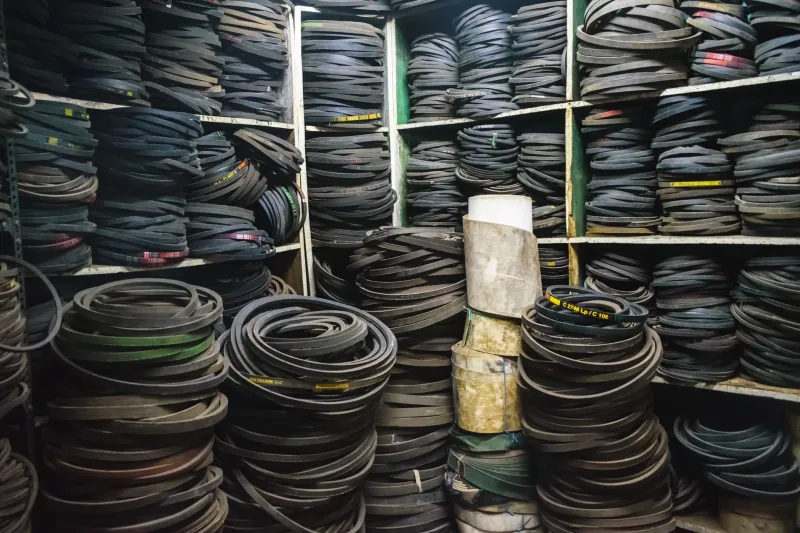
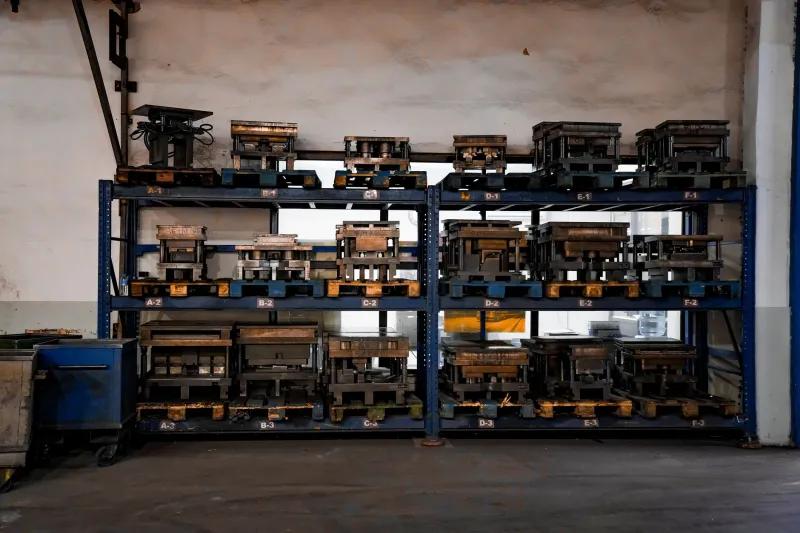
Walk into the spare parts room of almost any established manufacturing facility in the United States and you will encounter a familiar scene: rows of shelving lined with components from three different eras of equipment, cardboard boxes labeled in handwriting no longer recognized by anyone on staff, and plastic bags containing bearings whose origins have been lost to time. This is not merely a storage problem. It is a reliability problem, a procurement problem, and—quietly—a financial problem that compounds with every passing quarter.
The tendency to retain bearings rather than dispose of them is understandable. Industrial components are expensive, downtime is expensive, and the instinct to hold onto anything that might one day prove useful is deeply ingrained in maintenance culture. But the accumulation of components that were purchased for machines since decommissioned, sourced from suppliers long since discontinued, or simply misidentified during a rushed inventory intake creates conditions where the cure becomes indistinguishable from the disease.
When the Parts Room Becomes the Problem
The most immediate operational hazard posed by an overcrowded, poorly organized bearing inventory is the installation error that occurs under pressure. When a production line goes down and every minute of downtime carries a measurable cost, the technician dispatched to the parts room is not browsing at leisure. That individual is moving quickly, cross-referencing under stress, and relying on labeling, placement, and institutional memory to locate the correct component.
In a parts room where obsolete bearings occupy the same shelf space as current-specification components—and where labeling has degraded, faded, or simply never existed—the probability of a misidentification increases substantially. An incorrectly installed bearing does not always fail immediately. It may operate within acceptable parameters for days or weeks before the mismatch manifests as premature wear, elevated temperature, or unexpected vibration. By that point, the root cause has been obscured, and the diagnostic process begins from scratch.
This scenario plays out more frequently than most facilities formally document. The reason it goes undocumented is precisely the same reason it recurs: without a systematic audit and clearance process, the conditions that produced the error persist indefinitely.
The Institutional Knowledge Problem
There is a second dimension to the accumulated bearing problem that receives less attention but carries equal weight. In facilities where experienced maintenance technicians have worked for fifteen, twenty, or thirty years, a significant portion of the institutional knowledge governing the parts room exists entirely within those individuals' memories.
They know which shelf holds the bearings pulled from the press that was replaced in 2009. They know that the box labeled with a particular part number actually contains a different component because of a receiving error that was never corrected in the system. They know which supplier's packaging to trust and which to verify independently. This knowledge is real, it is functional, and it is not documented anywhere.
As experienced staff retire—a transition that is accelerating across US manufacturing as the workforce ages—that knowledge does not transfer automatically. The incoming technician inherits the physical parts room but not the interpretive framework that made it navigable. What was once a manageable, if imperfect, system becomes genuinely opaque. The bearing graveyard effect reaches its most dangerous expression not when the parts room is full, but when the person who understood it is gone.
Supplier Confusion and Procurement Drift
The organizational chaos generated by an unmanaged bearing inventory does not stay contained within the facility's walls. It extends outward into procurement relationships and supplier communications in ways that create friction, inefficiency, and occasional conflict.
When a purchasing request is generated based on a part number pulled from an aging, poorly maintained inventory record, there is a meaningful probability that the number itself is incorrect, outdated, or refers to a component that has since been superseded by a revised specification. Suppliers who receive ambiguous or contradictory requests must spend additional time seeking clarification, and the resulting back-and-forth delays procurement cycles that are already under pressure.
Furthermore, the presence of mismatched legacy bearings in a facility's inventory can distort the demand signals that inform procurement planning. If a component appears to be in stock when it is actually obsolete or incompatible with current equipment, reorder points are not triggered when they should be. The discovery that the apparent inventory is unusable typically occurs at the worst possible moment: during an unplanned maintenance event when no time exists for emergency sourcing.
The Opportunity Cost of Organizational Disorder
Beyond the direct costs of installation errors and procurement delays, the accumulated bearing inventory imposes a subtler but significant opportunity cost. Facilities that carry substantial volumes of obsolete, redundant, or misidentified components are effectively frozen in the past. Their parts rooms reflect the equipment configurations, supplier relationships, and engineering standards of previous decades rather than the present operational reality.
This creates a practical barrier to system optimization. When a maintenance or engineering team evaluates whether to upgrade a bearing specification—moving to a sealed variant that eliminates relubrication intervals, for example, or transitioning to a higher-capacity design that extends service life—the presence of a large existing stock of the old specification introduces inertia. The argument that the old stock should be consumed before the new specification is adopted is financially intuitive but operationally counterproductive. It defers the benefits of the upgrade indefinitely and keeps the facility tethered to a standard that has already been identified as suboptimal.
A Framework for Systematic Recovery
Addressing the accumulated bearing problem requires a structured approach rather than an opportunistic one. The following framework provides a practical starting point for US facilities undertaking this process.
Phase One: Complete Physical Census. Every bearing in the facility's possession must be physically located, identified, and logged. This includes components in the main parts room, in secondary storage areas, on maintenance carts, and in any informal holding locations that have accumulated over time. The goal at this stage is visibility, not judgment.
Phase Two: Cross-Reference Against Active Equipment. Each identified component should be matched against the current equipment inventory. Bearings that correspond to machinery no longer in service, or that carry specifications incompatible with any current application, should be flagged for removal. Components that cannot be positively identified should be treated as suspect until verified.
Phase Three: Condition Assessment. Bearings that survive the compatibility review must still be evaluated for storage condition. Components that have been improperly stored—exposed to moisture, temperature extremes, or contamination—may have degraded even without visible damage. Shelf life guidelines from manufacturers provide a baseline, but any component with compromised packaging or uncertain storage history warrants additional scrutiny.
Phase Four: Documentation and Standardization. The surviving, verified inventory should be catalogued in a format that is accessible, maintainable, and not dependent on any single individual's memory. Physical labeling should be standardized, and the catalog should be integrated with procurement systems to ensure that reorder triggers function accurately.
Phase Five: Disposal and Recovery. Obsolete and unusable components should be removed from the facility. Where possible, value recovery through resale or return programs should be explored, but the primary objective is clearance. A smaller, accurate inventory is operationally superior to a larger, uncertain one by every meaningful measure.
Moving Forward With Clarity
The parts room is not a museum, and the bearings it contains should not function as artifacts. Every component occupying shelf space in a facility represents either a genuine operational asset or a source of latent risk—and distinguishing between the two requires deliberate effort.
For facilities committed to precision, reliability, and informed procurement, the systematic reclamation of parts room clarity is not a housekeeping exercise. It is a foundational investment in the operational integrity that makes everything else possible.