Dead Stock, Live Consequences: How Stockpiled Spare Bearings Become a Financial and Operational Liability
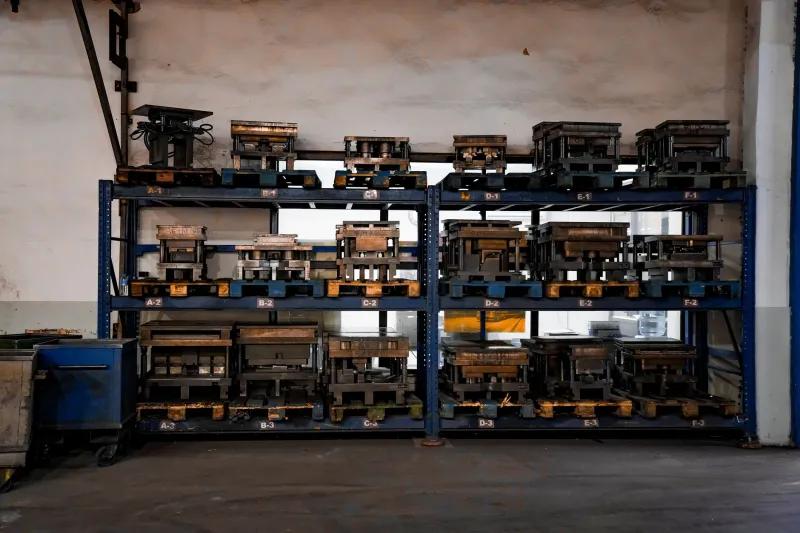
Walk through the parts room of almost any mid-sized manufacturing facility in the United States and you will likely find it: a collection of bearing boxes stacked in no particular order, some dating back years, a few missing labels, and more than a few that no one can confidently match to current equipment. This accumulation is rarely the result of negligence. Most of it began with good intentions—purchasing ahead of demand, holding over components from retired machinery, or hedging against supply disruptions. Over time, however, that well-meaning inventory quietly evolves into something far less useful, and considerably more expensive, than it first appeared.
The phenomenon is common enough to have earned an informal name among maintenance professionals: the bearing graveyard. It is a term that captures not just physical obsolescence but a broader failure of inventory discipline that carries measurable financial and operational consequences.
The Illusion of Preparedness
On paper, a fully stocked spare parts room signals operational readiness. In practice, the quality of that stock matters far more than its volume. Bearings are precision components with defined shelf lives, and those limits are not theoretical. Grease and lubricant compounds in pre-lubricated bearings degrade over time, even when the component has never been installed. Industry guidelines from major bearing manufacturers typically recommend retiring pre-lubricated bearings that have been stored for more than three to four years under standard conditions—and that timeline shortens considerably in environments where temperature fluctuation, humidity, or vibration are factors.
A bearing stored in an unconditioned warehouse in the Gulf Coast region, for example, faces dramatically different preservation challenges than one held in a climate-controlled facility in the upper Midwest. Yet many plants apply no differentiated storage protocols whatsoever, treating all spare components as interchangeable regardless of their age, condition, or storage environment.
The result is that when a crisis hits—a line goes down, a shaft fails at midnight before a major production run—maintenance teams reach for spares that may be years past their reliable service window. The bearing gets installed, the line comes back up, and within weeks the replacement itself fails. The root cause is rarely identified as the degraded spare. Instead, the failure is attributed to contamination, misalignment, or overloading, and the cycle continues.
Obsolescence Is a Faster Problem Than Most Plants Realize
Beyond lubrication degradation, there is a second and equally disruptive category of bearing graveyard liability: specification obsolescence. Equipment upgrades, motor replacements, and process modifications happen continuously in active manufacturing environments. Each change carries the potential to render previously compatible components mismatched to current specifications.
Consider a plant that replaced a legacy conveyor drive system with a higher-efficiency motor platform. The new motors operated at slightly different shaft tolerances and required bearings with updated internal clearances to accommodate modified thermal expansion characteristics. The old spare inventory—several dozen units purchased specifically for the previous system—was never reconciled against the new specifications. It remained on the shelf, tagged as available, and was eventually installed during an urgent repair. The resulting premature failures and associated downtime cost the facility significantly more than the original investment in those components.
This scenario is not unusual. In fact, it represents one of the most common ways that accumulated spare inventory transitions from asset to liability without anyone formally recognizing the shift.
The Hidden Carrying Costs
From a purely financial perspective, idle bearing inventory carries costs that rarely appear on a single line item but accumulate steadily across categories. Capital tied up in non-performing stock cannot be deployed elsewhere. Physical space occupied by obsolete components has an opportunity cost. Administrative time spent cataloging, auditing, and managing inventory that will never be used represents a recurring operational drain.
For larger facilities, the aggregate value of unusable spare bearing stock can reach into the tens of thousands of dollars when a thorough audit is conducted. Several plant managers who have undertaken formal spare parts rationalization programs have reported discovering components purchased under procurement contracts that no longer exist, for equipment that was decommissioned years prior. In one documented case at a Midwestern automotive supplier, a physical inventory reconciliation revealed that nearly 30 percent of bearing stock on hand was either expired, incompatible with current machinery, or duplicated beyond any credible usage scenario.
The financial write-down required to clear that inventory was painful. The operational clarity that followed, however, was described as transformative.
Building a Rational Reserve Strategy
The antidote to the bearing graveyard is not simply reducing inventory. It is replacing undisciplined accumulation with a structured reserve strategy built around a few core principles.
Criticality-based tiering is the foundation. Not every bearing in your facility warrants a spare on the shelf. The components that justify dedicated reserve stock are those installed in high-criticality positions where a failure would halt production, where lead times from suppliers are extended, or where the installation process itself requires significant downtime. Standard bearings in non-critical positions with reliable short-lead-time availability do not need to be held in quantity.
Condition and date tracking must be implemented for every component in storage. This means logging the purchase date, the manufacturer's recommended storage limit, and the storage conditions for each item. Scheduled quarterly or semi-annual reviews should flag components approaching their shelf life thresholds before they are pulled into service.
Specification reconciliation should be tied directly to the maintenance management system. When equipment is modified, upgraded, or replaced, the spare parts profile associated with that equipment should be updated simultaneously. Orphaned spares—components no longer matched to any active equipment specification—should be identified promptly and either returned to the supplier, liquidated, or formally written off.
Supplier partnerships can reduce the pressure to maintain large on-site reserves. Working with a distributor capable of guaranteed rapid fulfillment on standard components allows facilities to reduce buffer stock without sacrificing responsiveness. The goal is not zero inventory but right-sized inventory—reserves calibrated to actual risk rather than accumulated anxiety.
The Audit as a Starting Point
For facilities that have not recently conducted a systematic review of spare bearing stock, the audit is the logical first step. It does not need to be elaborate. A methodical physical count, cross-referenced against current equipment lists and supplier specifications, will surface most of the critical discrepancies within a few days of focused effort.
The findings are often uncomfortable. Discovering that a substantial portion of your safety stock is functionally worthless is not a pleasant operational revelation. But the alternative—learning that fact for the first time at two in the morning during a production emergency—is considerably worse.
Precision components are only as valuable as their condition and relevance at the moment they are needed. A bearing that has spent four years on a shelf in an unconditioned parts room, or one that was specified for equipment your facility retired before the last election cycle, is not a spare part. It is a liability wearing the label of preparedness. Recognizing that distinction is the first step toward building an inventory strategy that genuinely supports operational reliability rather than merely simulating it.