Substitute or Shut Down: A Practical Framework for Emergency Bearing Replacements

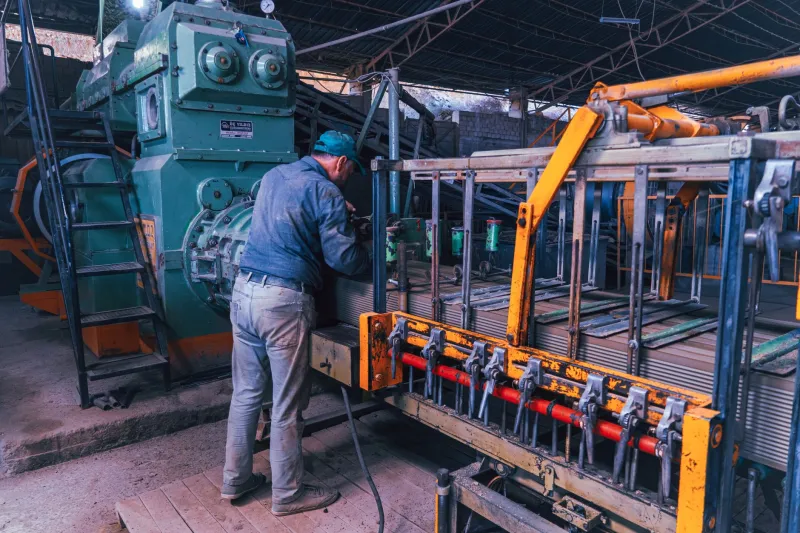
No maintenance manager plans for the 2 a.m. phone call. A bearing has failed, the line is cold, and the exact replacement isn't in the storeroom, isn't at the local distributor, and won't arrive from the primary supplier until Thursday. The shift supervisor is waiting. The production schedule is bleeding. And someone needs to make a call.
This scenario plays out regularly across US manufacturing facilities, from automotive stamping plants in the Midwest to food processing operations along the Gulf Coast. The instinct to find something that fits is understandable. But not all substitutions are created equal, and the difference between a workable interim solution and a compounding failure often comes down to a handful of technical factors that get overlooked under pressure.
Why Substitutions Happen—and Why They're Rarely Planned
Bearing substitutions typically arise from one of three situations: unexpected in-service failure, supplier stock unavailability, or a discontinued part number with no direct successor. In each case, the maintenance team is forced to evaluate whether a dimensionally similar bearing from a different series, manufacturer, or material specification can perform the same function without introducing new risk.
The challenge is that bearings are rarely isolated components. They interact with shafts, housings, lubrication systems, sealing arrangements, and load profiles that were engineered together. A substitution that appears straightforward on paper—same bore diameter, same outer diameter, same width—may carry hidden incompatibilities in internal geometry, clearance class, cage design, or material treatment that only become apparent after the line restarts.
The Technical Factors That Actually Determine Compatibility
When evaluating a candidate substitute bearing, experienced engineers typically work through a structured checklist rather than relying on dimensional matching alone.
Dimensional Envelope Bore diameter, outer diameter, and width are the obvious starting points, but they are not sufficient on their own. Shoulder heights, snap ring groove locations, and seal or shield configurations must also align with the housing and shaft geometry. A bearing that fits the bore but conflicts with the housing shoulder will generate axial stress that neither component was designed to absorb.
Internal Clearance Class Bearings within the same dimensional series can carry different internal clearance designations—C2, CN (standard), C3, C4. Substituting a C3 clearance bearing into an application designed for CN, for example, may introduce excess play that allows roller slip under light loads or thermal expansion that exceeds design tolerances in high-temperature environments. Clearance class should always be confirmed against the original specification.
Load Rating and Speed Capacity The dynamic and static load ratings of the substitute must meet or exceed those of the original. Undershooting either figure, even modestly, accelerates fatigue under the actual operating loads of the application. Speed ratings require equal attention: a bearing rated for lower speeds than the original may generate excessive heat and suffer premature lubrication breakdown in high-rpm applications.
Cage Material and Design Steel cages, brass cages, and polymer cages behave differently under vibration, shock load, and chemical exposure. In applications involving wash-down chemicals, extreme temperatures, or high centrifugal forces, cage compatibility with the operating environment is as important as any dimensional factor.
Lubrication Compatibility Pre-greased sealed bearings carry a factory lubricant that may or may not be compatible with the grease already present in the housing or relubrication system. Mixing incompatible greases—particularly those with different thickener bases—can cause rapid lubricant degradation and early failure. In emergency scenarios, this point is frequently overlooked until the substitute bearing fails within days of installation.
Scenarios Where Substitution Is Defensible
Not every emergency substitution is a gamble. In certain circumstances, a well-evaluated substitute is a legitimate and responsible interim measure.
When a bearing from the same manufacturer's equivalent series is available—a 6205-2RS replaced with a 6205-2Z of the same clearance class from the same producer, for instance—the substitution carries minimal technical risk and is generally acceptable for continued operation. Similarly, when a bearing from a different manufacturer meets or exceeds all rated specifications and the dimensional envelope matches exactly, the substitution is often sound provided the installation is logged and the component is scheduled for replacement with the correct specification at the next planned maintenance window.
Applications running at moderate speeds, under moderate loads, and in controlled environments offer the most forgiving conditions for interim substitutions. The stakes are lower, the failure modes are more predictable, and the maintenance team has more time to monitor the installation before committing to a longer run.
Scenarios Where Substitution Creates Greater Risk Than Downtime
The calculus changes significantly in high-speed, high-load, or safety-adjacent applications. A substitute bearing in a main spindle of a precision CNC machine, a conveyor drive in a food processing facility operating under USDA oversight, or a critical pump bearing in a chemical plant introduces risk that may far exceed the cost of a controlled shutdown and expedited correct-part delivery.
In these environments, the downstream consequences of a second failure—contamination, injury, regulatory exposure, or damage to surrounding components—typically outweigh the production loss from a planned stoppage. Maintenance teams working in regulated industries should be particularly cautious about substitutions that haven't been reviewed against applicable compliance requirements.
Substitutions should also be approached with extreme caution when the root cause of the original failure is not yet understood. Installing any bearing—substitute or otherwise—into an application that caused the previous component to fail prematurely without addressing the underlying condition is almost certain to produce an identical outcome.
Building a Pre-Emergency Substitution Plan
The most effective way to handle emergency substitutions is to prepare for them before they occur. Maintenance teams that maintain a cross-reference library of approved substitutes for their highest-criticality bearings are far better positioned to make confident decisions under pressure than those relying on ad hoc judgment at 2 a.m.
This library should document approved alternates by part number, clearance class, manufacturer, and any application-specific caveats. It should be reviewed and updated whenever equipment is modified, new machinery is commissioned, or supplier relationships change. Coordinating this work with a knowledgeable bearing distributor—one with access to broad manufacturer inventory and application engineering support—can significantly reduce the research burden on internal teams.
Stocking a small quantity of approved substitutes for the most critical applications is also worth considering. The carrying cost of a handful of strategically selected bearings is negligible compared to the cost of an unplanned production halt.
The Decision in Real Time
When the emergency is already underway and a decision must be made, the framework is straightforward: confirm the dimensional envelope, verify the clearance class, check the load and speed ratings, assess cage and lubrication compatibility, and evaluate the criticality of the application. If all factors align and the application is not safety-critical, the substitution is defensible as a documented interim measure. If any factor is uncertain or the application carries elevated risk, the more responsible path is often a controlled shutdown with expedited sourcing of the correct component.
Under pressure, the temptation to move quickly is real. But a bearing substitution that fails within a week costs more in every dimension than the shutdown it was meant to prevent. Knowing the difference—before the phone rings—is what separates a maintenance team that manages crises from one that creates them.