One Call Away from a Shutdown: Why Single-Source Bearing Procurement Is a Risk You Can No Longer Afford

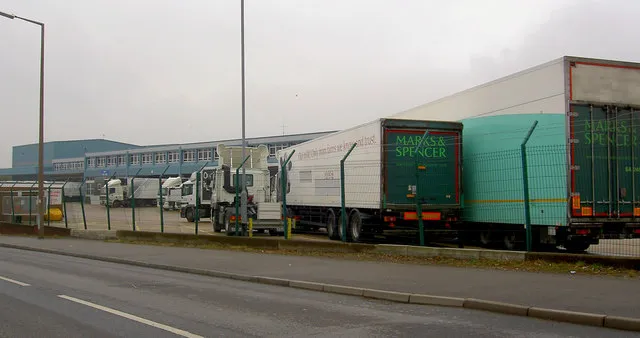
Photo: industrial supply chain manager reviewing bearing inventory warehouse, via s3.amazonaws.com
For most plant managers and procurement officers, the relationship with a primary bearing supplier feels like a fixed part of the operational landscape — reliable, familiar, and rarely questioned. Pricing is established. Lead times are predictable. The paperwork flows. It is precisely this comfort that makes the disruption, when it arrives, so devastating.
A supplier closure, a sudden capacity constraint, or a product quality recall does not announce itself in advance. It arrives as a terse email, an unanswered phone call, or — in the worst cases — a shipment that never comes. For manufacturers who have built their procurement strategy around a single source, the consequences can escalate from inconvenience to full production stoppage within days.
The Anatomy of a Supplier Disruption
Supply chain failures in the bearing and mechanical components sector tend to follow recognizable patterns, even if the triggering events vary widely. Financial distress is one of the most common culprits. A regional distributor operating on thin margins may quietly absorb losses for months before an abrupt closure leaves customers scrambling. In other cases, a manufacturer's primary supplier is acquired, and the acquiring entity discontinues certain product lines or redirects inventory allocation toward higher-volume accounts.
Capacity crises present a different but equally disruptive scenario. A surge in demand — driven by reshoring activity, infrastructure investment, or a sector-wide equipment cycle — can overwhelm a supplier's production or warehousing capacity. Customers who assumed priority treatment based on historical volume may find themselves deprioritized in favor of larger contracts. Lead times that once ran two weeks can stretch to twelve with little warning.
Quality failures represent perhaps the most operationally complex form of disruption. When a bearing lot is flagged for dimensional non-conformance, contamination, or inconsistent heat treatment, the affected inventory cannot simply be replaced overnight. The manufacturer must identify the scope of the problem, quarantine suspect stock, and locate an alternative source capable of meeting the same specifications — all while production schedules continue to demand components.
Why Single-Source Dependency Persists
Given the well-documented risks, why do so many US manufacturers continue to rely on a single bearing supplier for critical component categories? The answer lies in a set of rational short-term incentives that collectively produce irrational long-term exposure.
Consolidating spend with one supplier typically yields better pricing, simplified invoicing, and a streamlined qualification process. For procurement teams under pressure to reduce administrative overhead and demonstrate cost savings, these are genuinely compelling advantages. The risk of disruption, by contrast, is abstract — a low-probability event that rarely appears on quarterly performance dashboards until it materializes.
There is also an organizational inertia at work. Qualifying a new bearing supplier requires engineering review, dimensional verification, and often a period of parallel testing. For facilities running lean on technical staff, that investment is difficult to prioritize when the current supplier is performing adequately. The result is a procurement posture that optimizes for efficiency in normal conditions while leaving the operation exposed in abnormal ones.
The Multi-Source Framework: Resilience Without Inventory Bloat
The conventional response to supply chain risk — carrying larger safety stock — is increasingly impractical. Warehouse space is expensive. Capital tied up in excess inventory is capital unavailable for equipment investment or workforce development. Fortunately, supplier diversification does not require a corresponding expansion of on-hand inventory. It requires a different kind of procurement architecture.
The foundation of that architecture is tiered sourcing. For each critical bearing category, procurement teams should identify and qualify at minimum two approved suppliers: a primary source responsible for the majority of routine volume, and at least one secondary source maintained in an active — rather than dormant — status. The distinction matters. A supplier relationship that exists only on paper, with no recent transaction history and no current pricing agreements, offers little practical protection when a crisis demands rapid response.
Maintaining secondary suppliers in active status means placing periodic orders, even when the primary source is performing well. The volume need not be substantial — a modest allocation of ten to fifteen percent of routine purchases is often sufficient to sustain the relationship, keep pricing current, and preserve the supplier's familiarity with your specifications. This approach distributes a small portion of spend in exchange for a disproportionately large reduction in vulnerability.
Geographic diversification adds another layer of resilience. A procurement portfolio that draws from suppliers in different regions of the country — or that includes both domestic and carefully vetted international sources — is less susceptible to localized disruptions such as regional logistics failures, weather events, or facility-specific incidents. The reshoring trend has expanded the domestic supplier base for many bearing categories, making geographic diversification more achievable than it was a decade ago.
Qualifying Backup Suppliers Before You Need Them
The qualification process for secondary suppliers is an area where many manufacturers underinvest until a crisis forces the issue. Attempting to qualify a new supplier under production pressure — with engineers diverted from other priorities and procurement staff fielding urgent calls — is an exercise in controlled panic. The results are rarely satisfactory.
Proactive qualification, conducted during normal operating conditions, allows for a thorough evaluation of dimensional conformance, material certifications, quality management systems, and delivery performance. It also creates the opportunity to identify any application-specific nuances — lubrication compatibility, tolerance stack considerations, environmental rating requirements — before they become problems in production.
Documentation is equally important. Approved supplier lists, qualification records, and current pricing agreements should be maintained in a format that is accessible to both procurement and engineering teams. When a primary supplier disruption occurs, the ability to execute a sourcing pivot in hours rather than days depends entirely on the quality of the preparation that preceded it.
Reading the Early Warning Signs
Supplier disruptions rarely occur without precursors. Procurement professionals who develop the habit of monitoring supplier health indicators can often identify emerging risks before they become acute. Lengthening lead times on standard catalog items, increasing frequency of backorder notifications, and changes in customer service responsiveness are all signals worth investigating.
Financial indicators, where accessible, can provide additional context. Credit rating changes, ownership transitions, or significant shifts in a supplier's customer base may suggest underlying instability. Industry publications and trade associations often surface this type of information before it becomes widely known.
Establishing a periodic supplier review cadence — even a brief quarterly assessment — creates a structured opportunity to evaluate these signals and adjust procurement strategy accordingly. It also reinforces the internal discipline required to treat supplier risk as an ongoing management responsibility rather than a reactive crisis response.
The Strategic Imperative
The bearing supply chain disruptions of recent years — accelerated by pandemic-era logistics failures, raw material constraints, and the ongoing reconfiguration of global manufacturing — have demonstrated conclusively that single-source dependency is not a manageable risk. It is a deferred liability.
Building a resilient, multi-source procurement strategy requires upfront investment in supplier qualification, relationship management, and process documentation. That investment is modest relative to the cost of a single unplanned production stoppage. More importantly, it transforms bearing procurement from a transactional function into a genuine operational asset — one that continues to deliver value precisely when conditions are most demanding.