Ahead of the Rush: How Sector-Specific Seasonal Cycles Should Drive Your Bearing Procurement Calendar

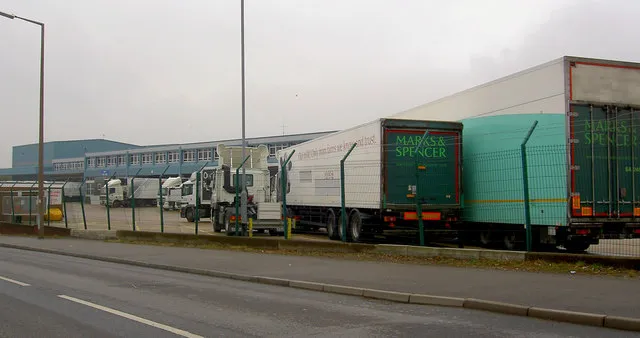
Photo: BLMIdaho, Public domain, via Wikimedia Commons
In industrial supply chain management, timing is rarely celebrated until it fails. A bearing that arrives three weeks late during a seasonal production ramp does not merely delay a shipment—it can halt an entire line, forfeit a contract, and hand a competitor an opening that takes months to recover. Yet across American manufacturing, the same seasonal bottlenecks appear with remarkable predictability, year after year, while procurement strategies remain stubbornly reactive.
The industries that build agricultural equipment know spring is coming. Food processors know harvest season will strain their lines by September. Automotive suppliers know Q4 model-year pressure is a constant. The cyclical nature of these demands is not a surprise. The stockouts that accompany them, however, often are—because the bearing procurement calendar was never synchronized with the production calendar in the first place.
This guide examines the seasonal demand patterns that define several major US manufacturing sectors and offers a practical framework for aligning bearing inventory and sourcing strategies with the rhythms of each industry.
Construction and Heavy Equipment: The Spring Surge
For manufacturers and distributors serving the construction equipment sector, the procurement calendar effectively resets every January. Equipment dealers and rental fleets begin ordering replacement parts and new units in anticipation of ground-thaw conditions across the northern United States, with peak ordering activity typically running from February through April.
The bearings most exposed to this seasonal surge include heavy-duty tapered roller bearings used in wheel ends and final drives, spherical roller bearings in excavator swing assemblies, and needle roller bearings in hydraulic cylinder linkages. Demand for these components can spike 30 to 50 percent above baseline levels during the February-to-April window, and suppliers who have not positioned inventory ahead of that curve find themselves competing for allocation with dozens of other distributors in the same situation.
The practical implication for procurement teams serving this sector is straightforward: purchase orders for spring-demand bearings should be placed no later than November of the preceding year. For components with extended lead times—certain large-bore spherical bearings sourced from specialty manufacturers, for example—October placements are not conservative; they are necessary.
Agricultural Equipment: A Two-Wave Season
Agriculture presents a more complex seasonal profile than construction because it operates on two distinct cycles: planting season in the spring and harvest season in the fall. Bearings used in planters, cultivators, and soil-preparation equipment face peak demand from January through March, while those used in combines, grain carts, and harvesting platforms see their highest replacement rates from July through September.
The challenge for bearing distributors serving agricultural OEMs and aftermarket dealers is managing inventory across both waves without carrying excessive stock through the quiet periods between them. Flange-mounted units, agricultural disc bearings, and conveyor bearings for grain handling equipment all follow these twin peaks closely.
A practical approach involves treating the two cycles as separate procurement events with distinct lead-time anchors. For planting-season components, target purchase order placement in October or November. For harvest-season components, initiate procurement discussions with suppliers in April, well before the summer quiet period that precedes the fall surge. Building a supplier relationship that allows for flexible call-off schedules—where inventory is reserved but drawn down incrementally—can significantly reduce the capital tied up in seasonal buffer stock.
Food and Beverage Processing: The Fall Acceleration
Food processing facilities across the US experience their most intensive operational periods in late summer and fall, driven by the convergence of harvest processing, holiday production runs, and year-end contract fulfillment. Facilities processing canned vegetables, packaged meats, dairy products, and baked goods all tend to run extended shifts beginning in August and continuing through November.
Bearings in food processing environments face a unique combination of seasonal volume pressure and application-specific constraints. Stainless steel bearings, food-grade lubricated units, and corrosion-resistant housed bearings must meet sanitary design standards that narrow the field of acceptable suppliers. When a line goes down during peak production and the required bearing is not in stock, the options are limited—and the cost of waiting is measured not just in downtime but in spoiled product and missed delivery windows.
For procurement teams in this sector, the inventory strategy should prioritize safety stock levels on the most failure-prone bearing positions—typically conveyor line bearings, mixer shaft bearings, and pump bearings—with replenishment orders placed by June to ensure availability through the fall acceleration. Given the specialty nature of food-grade components, lead times of 8 to 12 weeks are not uncommon, making summer procurement planning essential rather than optional.
Automotive Manufacturing: The Q4 Model-Year Pressure
Automotive manufacturers and Tier 1 and Tier 2 suppliers operate under a production calendar dominated by model-year changeovers and year-end volume targets. Q4—October through December—typically represents the highest production intensity period for North American automotive assembly, as manufacturers push to meet annual unit commitments and dealers build inventory ahead of the new calendar year.
The bearing categories most affected include precision ball bearings for electric motor and transmission applications, wheel bearing hub assemblies, and high-speed angular contact bearings for powertrain components. The shift toward electric vehicle production has introduced additional demand variability, as EV drivetrains require bearing specifications that differ substantially from those in conventional internal combustion platforms.
Automotive procurement teams generally operate under JIT (just-in-time) frameworks that compress inventory buffers to minimal levels—a strategy that amplifies the consequences of any supply disruption during peak periods. For bearing distributors serving this sector, the value proposition is not simply product availability but the ability to guarantee delivery reliability during Q3 and Q4 without requiring customers to abandon their lean inventory principles. Establishing consignment or vendor-managed inventory arrangements for high-velocity bearing SKUs is one mechanism for delivering that guarantee.
Building a Seasonal Procurement Calendar: Practical Steps
Regardless of sector, the structural approach to seasonal bearing procurement follows a consistent logic. The following steps provide a working framework:
Map Your Customer's Production Calendar, Not Just Your Own Understanding when your customers ramp production—and by how much—is the foundation of seasonal planning. Survey key accounts annually to capture anticipated volume changes by quarter.
Establish Lead-Time Anchors for Critical SKUs For each high-velocity or specialty bearing in your inventory, document the realistic lead time from your supplier during peak demand periods. These are often significantly longer than off-peak lead times and should drive your procurement trigger dates.
Set Seasonal Safety Stock Targets Rather than maintaining a single static safety stock level throughout the year, adjust inventory targets upward in the 60 to 90 days preceding each sector-specific peak. A seasonal safety stock multiplier of 1.5 to 2.0 times the baseline level is a reasonable starting point for most applications.
Negotiate Flexibility Into Supplier Agreements Wherever possible, secure blanket purchase agreements or reserved capacity arrangements with your bearing suppliers ahead of peak periods. This provides cost predictability while ensuring access to supply when spot market availability tightens.
Review and Recalibrate Annually Seasonal demand patterns shift over time as industries evolve, new products enter the market, and macroeconomic conditions change. A procurement calendar that served well in 2022 may need meaningful adjustment by 2025. Build an annual review of seasonal performance data—stockout events, excess inventory, and lead-time variances—into your planning cycle.
The Competitive Advantage of Anticipation
In the bearing supply business, the distributors and procurement teams that earn long-term customer loyalty are rarely those with the lowest price on any given transaction. They are the ones who have product available when everyone else does not—during the spring construction push, the fall harvest scramble, or the Q4 automotive sprint.
That availability is not accidental. It is the result of a procurement strategy that treats the industrial calendar as a map rather than a surprise, and that positions inventory ahead of demand rather than in response to it. For US manufacturers navigating the predictable pressures of seasonal production, the bearing supply chain that anticipates the rush is the one that keeps the lines running when it matters most.